MULTIPLI/CITY
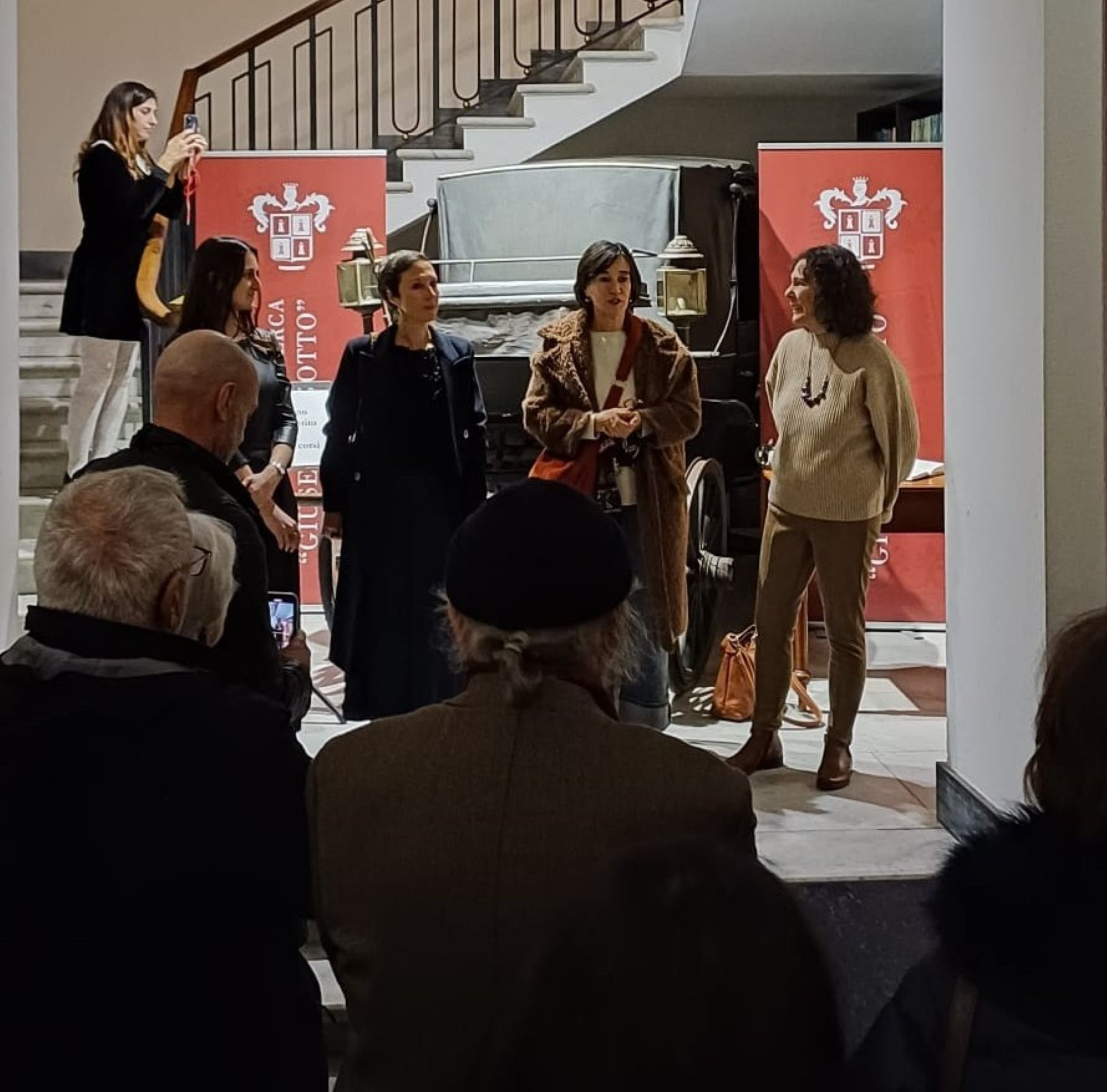
2026 Şiir Özbilge Fondazione Siotto. / Cagliari - Italy "Multipli/City" Solo Exhibition Curated by Carolina Floris, Caterina Ghisu and Monica Grossi.
Benvenuti a ChaosTantin, la città di Şiir.
Nella sua serie ‘ChaosTantin’, Şiir Özbilge dipinge i caratteri bizzarri ma anche vivaci d’Istanbul. La città è un campo di gioco dove vari personalità di diversi background si incontrano per formare una sorta di brodo primordiale che cuoce dei ibridi sociali non comuni: uno spazio dove culture si scontrano col tempo, il paradiso dei controversi, il punto d’incontro del West con l'Oriente, una città che è consumata mentre divora i suoi abitanti, che mastica e sputa quelli che non possono sopportare la sua bellezza, creando dei caratteri che sono trasformati in una sorta di puzzle che appartengono solo a questo luogo, in questa armonia utopica però storta. Il lavoro di Siir è uno specchio della società.
Sine Özbilge
Alphabet – Room 1
It is in vain that we say what we see,
because what we see never resides in what we say.
Maurice Merleau-Ponty
Present and past, truth and lies, complexity and simplicity, accusation and storytelling, individuality and collectivity, order and chaos.
Şiir Özbilge’s artistic universe is rich in refined symbols enclosed in solutions that enchant the eye and touch our intimacy and essence as inhabitants of the world.
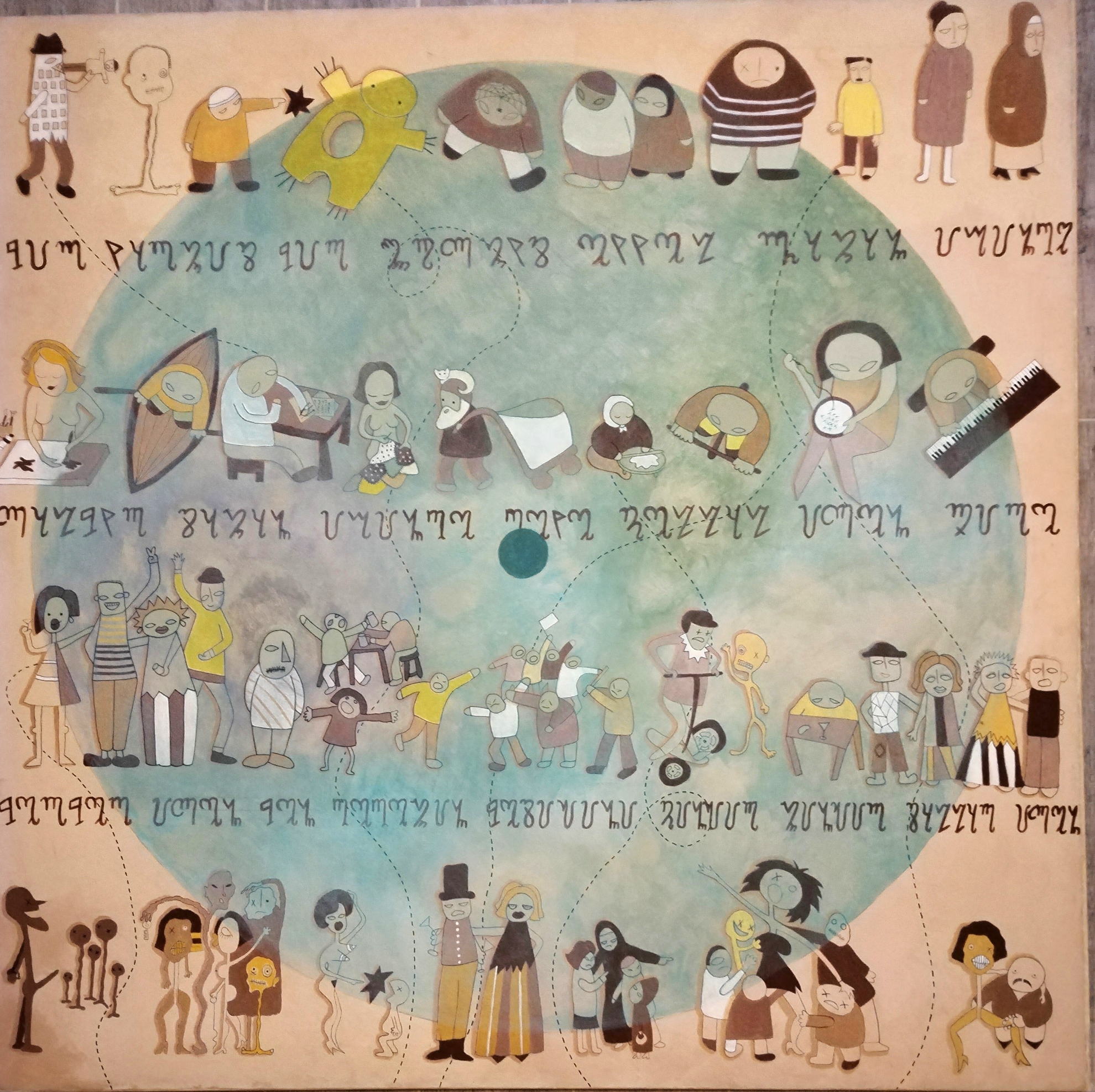
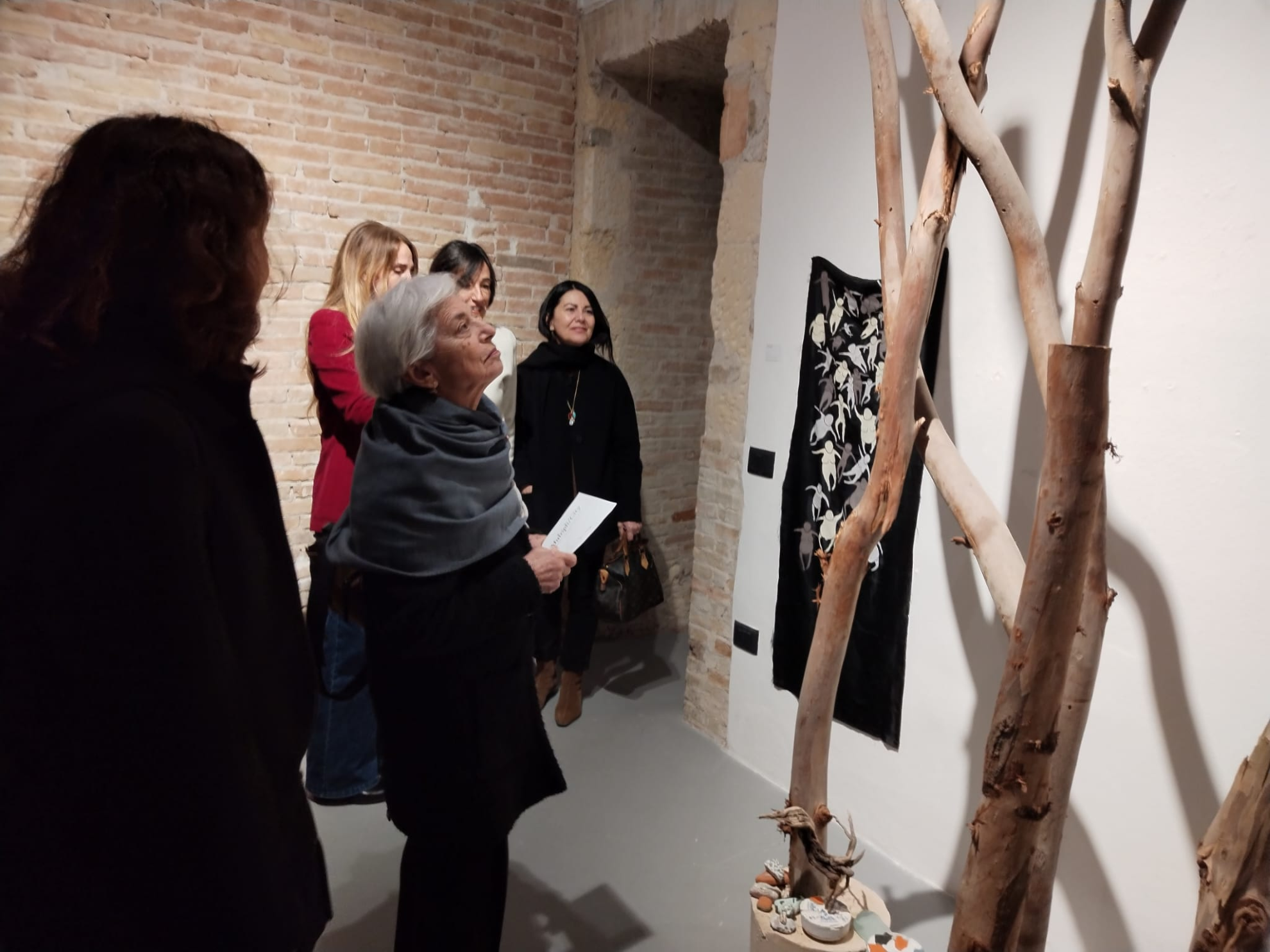
In Theban alphabet, which opens the exhibition, writing interacts with a space that represents the Artist’s cultural coordinates: the symbolic characters—who appear in the artwork and will be seen again in other works — align in space, supported by lines of an inaccessible writing, the ancient esoteric female alphabet known as the “witches’ alphabet,” here used to transliterate the verses of the nursery rhyme that begins all Turkish fairy tales:
“Once upon a time
while a camel was a crier,
while a flea was a barber,
while I was rocking
my father’s cradle.”
The association of real language and imaginary writing here bridges different cultures and past and present, becoming a meditation on the unspeakable and manifesting the impossibility — but also the right — of expressing certain narratives. The act of writing, paired with the canvas space, creates a mental space that welcomes notes and memories, accusations and hopes, free from the strict logic of the real world and confidently open to what we do not yet know.
The adoption of an alphabet historically associated with Western occult tradition and esoteric practices (introduced in 1518 in the treatise Polygraphia by Benedictine abbot Johannes Trithemius) to translate words belonging to the Artist’s mother tongue and childhood evokes inner narrative and is a symbol of cultural multiplicity and different realities: writing thus becomes a sign of the untranslatable and a metaphor for the complex identity of someone who places nomadism and humanism at the heart of her poetic foundation.
The esoteric alphabet also represents the political gesture of those who, through a secret language, invent an autonomous female space, challenge the boundaries of imposed identity, and create a device for symbolic resistance against religious and patriarchal norms. It is a strategy for reclaiming the self in a social context where the visibility and control of female bodies remain sensitive issues, in an act of symbolic resistance that refers to the subversive mimesis theorized by Luce Irigaray and creates a break with the dominant language, allowing the female subject to inscribe herself in an autonomous and ungraspable symbolic space.
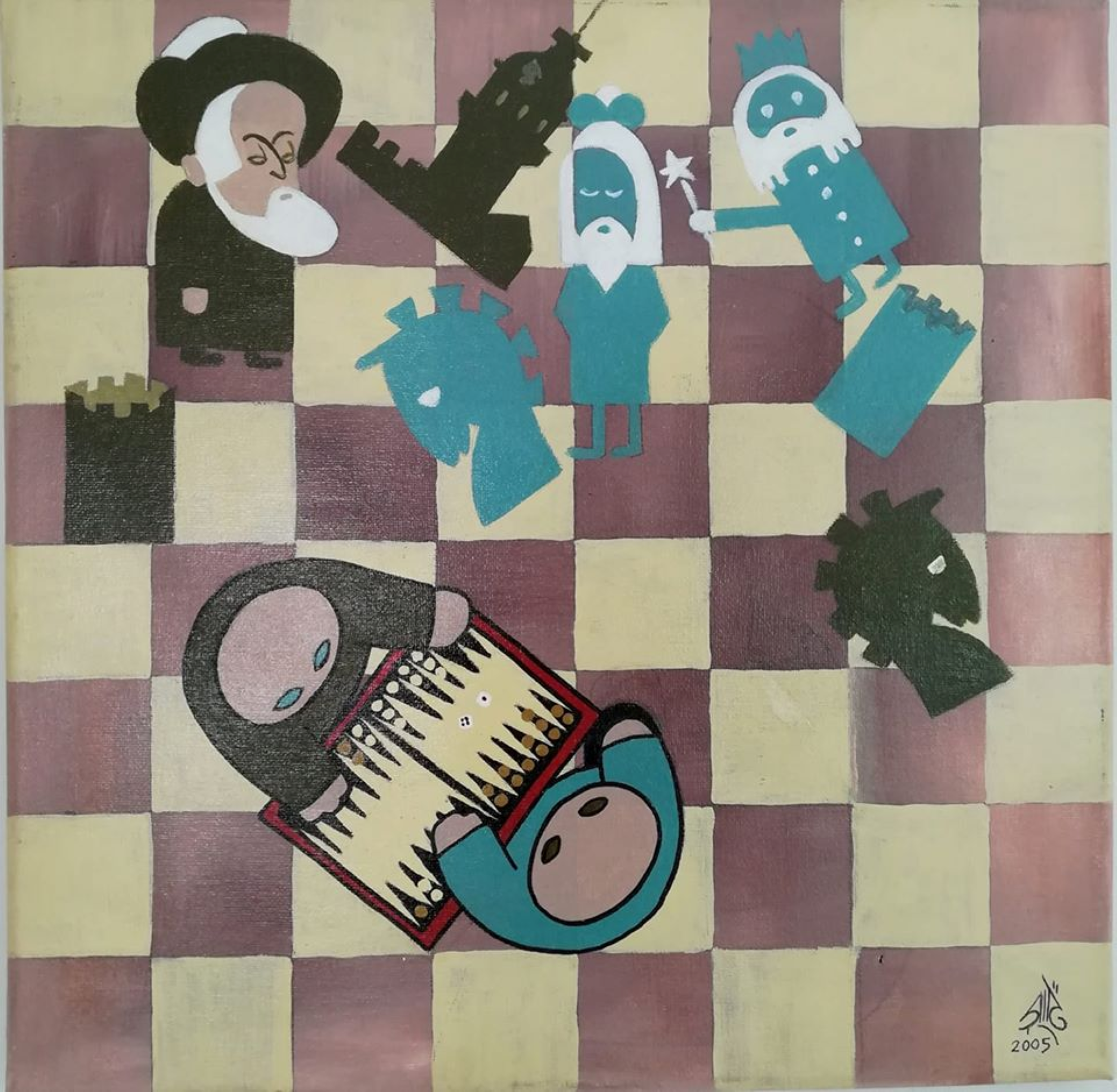
Moreover, the choice of a Western alphabet creates a short-circuit with the Mediterranean-Middle Eastern tradition of calligraphy, another theme dear to Özbilge, opening a space of cultural hybridization that challenges the idea of authenticity or “purity” in traditions. It is a writing act that becomes a witness to social thought: Özbilge’s works speak of identity, belonging, movement, and community.
It is a critique of religion and power: by escaping the more rigid forms of religious normativity, another symbolism is proposed—one not codified by institutional power—that explores a non-patriarchal and non-denominational spirituality.
It is space for a “ciphered” narrative as an aesthetic-political choice: illegibility itself becomes content, in a context where what cannot be read cannot be controlled either.
It is a manifestation of a humanitarian impulse that instrumentally adopts esoteric and trans-cultural forms to escape the dominant powers: the Artist can position herself within a lineage of witches, magicians, heretics, archetypal figures who challenge the established order.
Finally, it is an act of de-coding and re-coding language, no longer a tool for clear and institutional communication, but a subjective, secret, poetic sign. In a country where writing and language are charged with historical and political meaning (in 1928, the Turkish language underwent a deep reform, with the introduction of a new alphabet replacing the Arabic-Ottoman one), a “ghost alphabet” suggests new reflections on memory, loss, identity, secrecy, and the otherness that distinguishes us in our belonging to the human race.<
Abstraction and reimagining of reality find new forms in Fragments, where reinvention passes through the transformation and parceling of matter, which then recomposes into a whole full of meaning.
Once again, it is an invitation to look at the world with eyes capable of perceiving multiplicity, not only turning toward what manifests overtly, but also toward what it evokes in our inner universe and what we have not yet seen or known.
Monica Grossi
The cities - Room 2
Gündüz Vassaf argues that Şiir Özbilge's works are a portrait of Istanbul, which she calls Kaostantin - a play on words that I try to translate as Caostantinopoli - thinking of a phrase from Edmondo De Amicis' 1874 travel notes:
Constantinople is a Babylon, a world, a chaos.
The Istanbul painted by Şiir Özbilge is both a real city and an inner city.
It is the matrix of an imagined city - like Italo Calvino's invisible city - which has its roots in plural civilisations, moving along two perspectives: one vertical, inhabiting the sky, the other horizontal, or more often diagonal, unfolding along the city streets. But it is also the place of return - and here it is Calvino's La strada di San Giovanni - of the exploration of memory and intellectual formation, which Şiir Özbilge accomplishes through the painting of urban landscapes that blend with memories without nostalgia, asking instead how the city has shaped her worldview and her poetics.
Gifted with a telescopic gaze, borrowed from one of her favourite artists, Pieter Bruegel the Elder, Şiir Özbilge creates a teeming chaos of architecture, characters and allegorical figures, in tragicomic events in which the artist's eye is not exempt from severe criticism of the neoliberal economy of the 21st century.
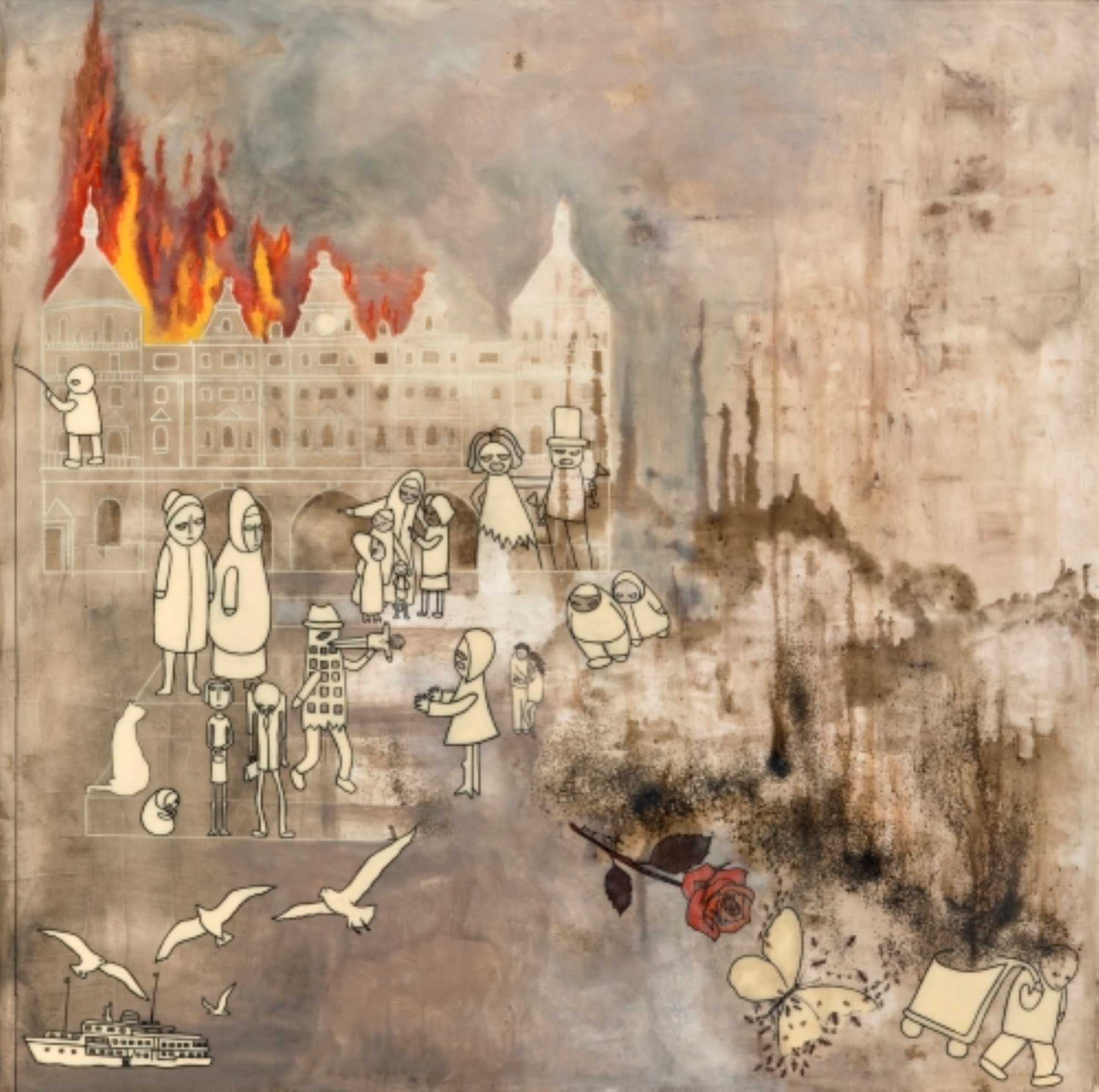
The city becomes a place for preserving memory as an act of political resistance. One example is Haydarpaşa train station (2010), the work through which Şiir Özbilge denounces the local administration's plans to transform the imposing building overlooking the Bosphorus, on the Asian shore of the city, into a luxury hotel.
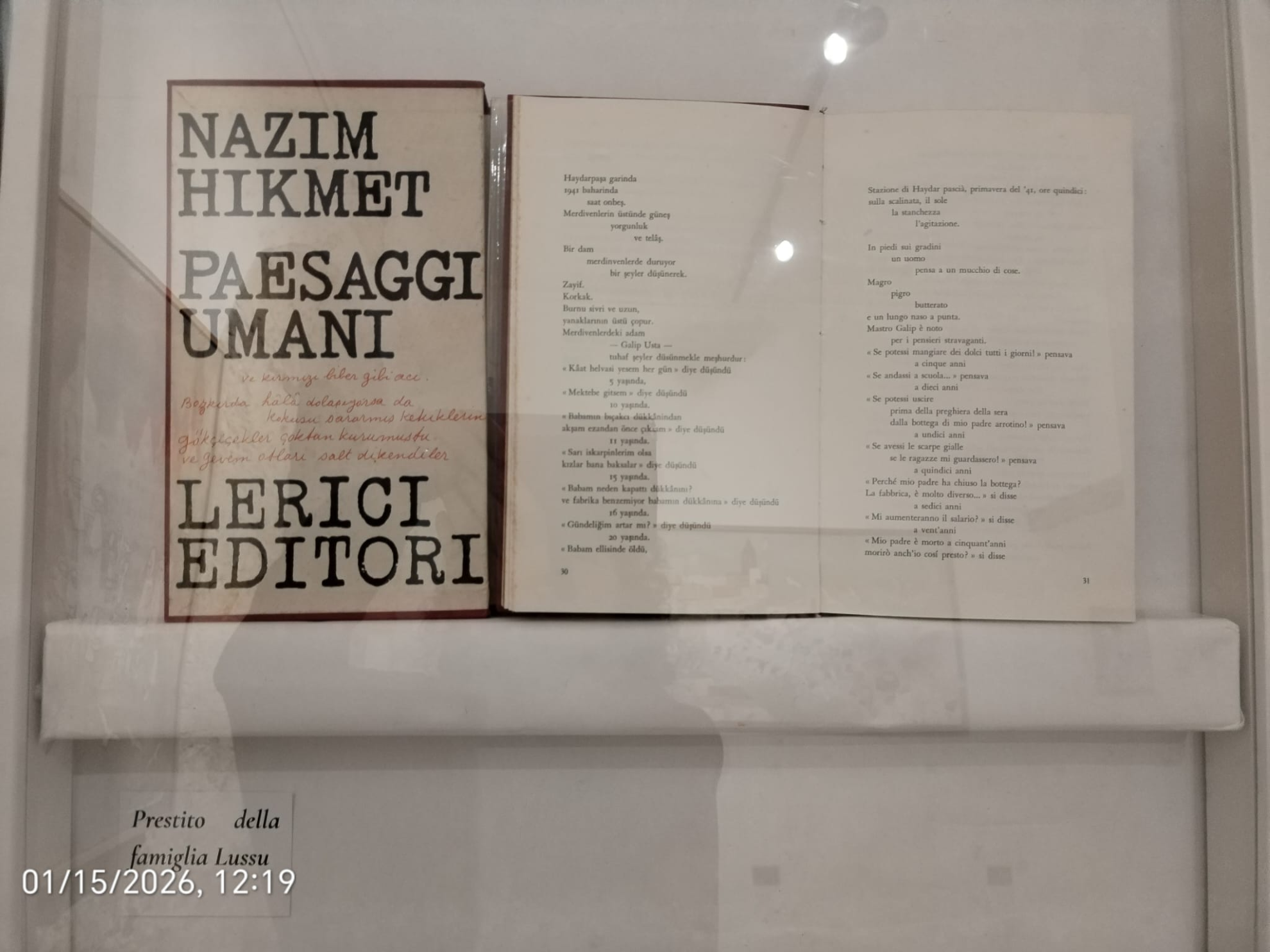
The story that inspired Siir is that of Human Landscapes, the great unfinished poem by Nâzım Hikmet, which begins in Haydarpaşa station. The writing of this monumental work, conceived as a mosaic of lives, faces and stories of the Turkish people, began in the 1940s, while Hikmet was imprisoned in Bursa on charges of communist propaganda. Among the fragments that have come down to us, the one entitled In that year 1941... recounts life and the constant comings and goings at the large station, a nerve centre for internal migration: the inhabitants of Anatolia arrive there in search of work, and the station becomes a symbol of hope and a meeting point. Hikmet describes this crowd of men and women on their journey, evoking images such as butterflies and roses, which metaphorically cross the scene.
Today, that same place has lost its original function: the station has been burned down, trains no longer arrive, replaced by a hotel accessible only to the wealthy. The transformation of Haydarpaşa thus becomes a metaphor for erased memory, for time that changes collective spaces and for stories that risk being lost.
It is from this story that Siir's painting was born: a poetic tribute to the station, to the people who passed through it, and to that human dimension that Hikmet was able to capture with such lucidity and compassion.
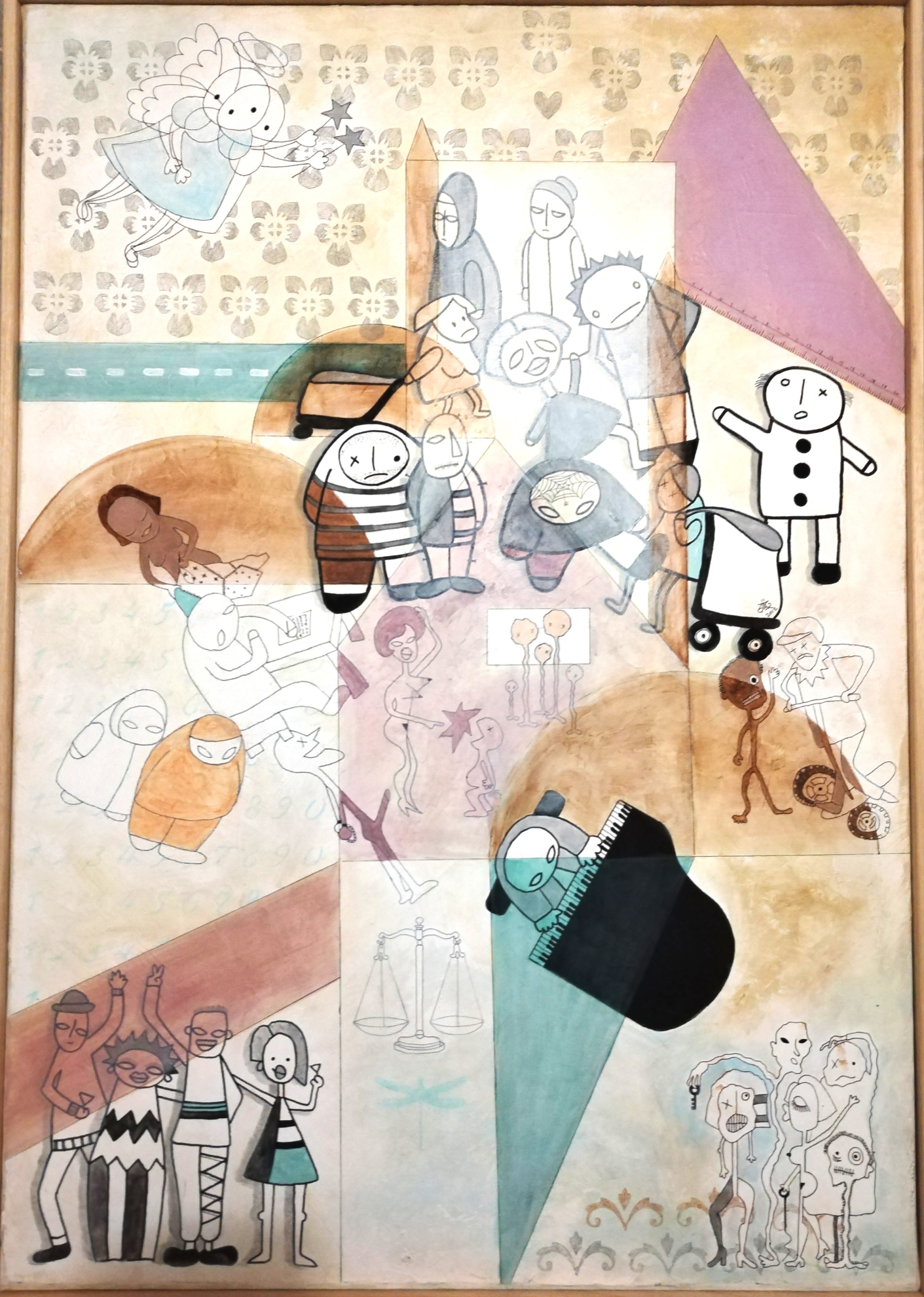
Şiir Özbilge's Istanbul is a city inhabited simultaneously by the living and the dead, and the boundary between them is uncertain because the ghosts seem more alive than the living, who often appear grey and fearful. Among the dead in this Turkish Spoon River, Patchwork features a male figure in purple shooting a gun, representing the murderer of Hrant Dink, a Turkish journalist and writer of Armenian origin. His assassination caused enormous dismay throughout Turkey. For the first time in the history of this country, a procession of over 100,000 people marched at his funeral, chanting slogans for reconciliation and displaying placards bearing the phrase “We are all Dink, we are all Armenians”. There are also positive elements, such as Professor Gündüz Vassaf, Afife Jale, the first Muslim actress of the 1920s who represents the women's revolution in Turkey, Hezarfen, the flying man who was expelled from the city for flying from the Galata Tower to Üsküdar, crossing the Bosphorus, Cybele, the winged goddess who came to Istanbul from Anatolia; and allegorical figures such as Joy, the Boatman, or symbols such as the tulip or the yellow character representing evil.
In Şiir Özbilge's painting, there is not only Istanbul, but also flashbacks of memories of other cities where he has lived: Vienna, Madrid, Antwerp and San Francisco. Today in Cagliari, Şiir's interpretation of Poetto is surmounted by the inscription Mundus vult decipi, the world wants to be deceived, ergo decipiatur, therefore let it be deceived. A further mirror of our post-truth times.
Caterina Ghisu
Hierarchies - Room 3
Is it possible to move “from the old to the new”?
Like butterflies…
From ignorance to a state of awareness…
Can a revolutionary intellectual metamorphosis
allow us to live in harmony
with all differences?
These are the questions Şiir Özbilge asks herself, intent on imagining a world both revolutionized and revolutionary, a world in which hierarchies, visual, cultural, and political, begin to creak and loosen. It is enough to look around to understand it: the chaos that inhabits her works bears none of the threatening uncertainty with which it is often accused. It is, rather, a living organism, a fertile swarm where differences are not disciplined but welcomed. It is a positive chaos, one might say, capable of making space for what usually remains at the margins. For Şiir Özbilge, chaos does not divide, it liberates: no longer right or wrong, good or bad, us or them, but a spectrum of possibilities coexisting like voices in a choir.
To construct this world, the gaze itself must also transform. The artist deliberately renounces Western linear perspective, which, by imposing a single privileged point from which to observe the world, organizes reality according to power relations. It is no coincidence that, in its place, Şiir Özbilge draws on the tradition of miniature painting, where, as Aby Warburg would remind us, space is not mathematical but symbolic, affective, narrative. In miniature paintings, no foreground is more important than the background: what matters is meaning, not scale. It is a world in which the hierarchies of looking dissolve, and with them the hierarchies of living. Humans, plants, and animals finally coexist in a “timeless state, a state of harmony.”
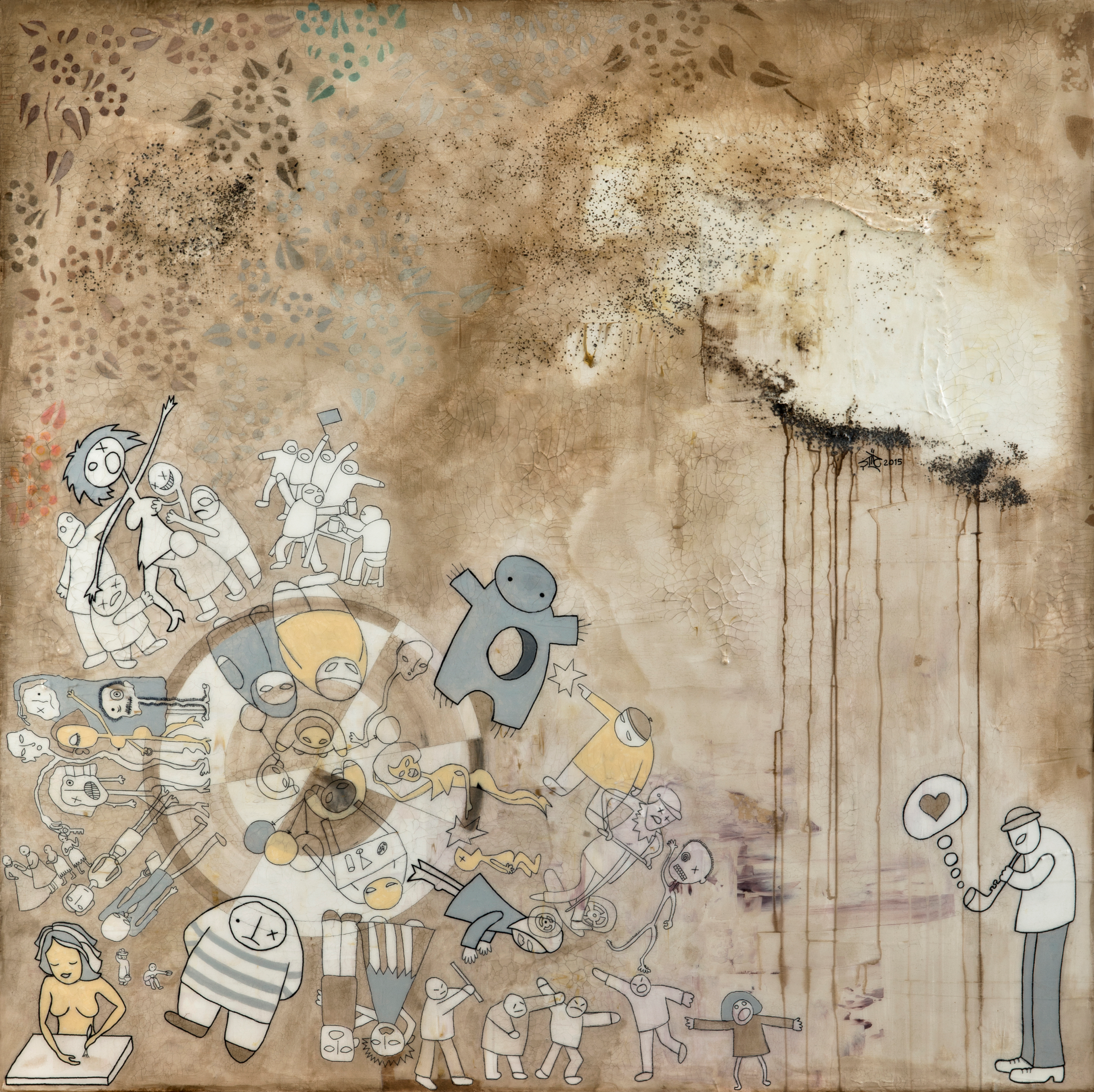
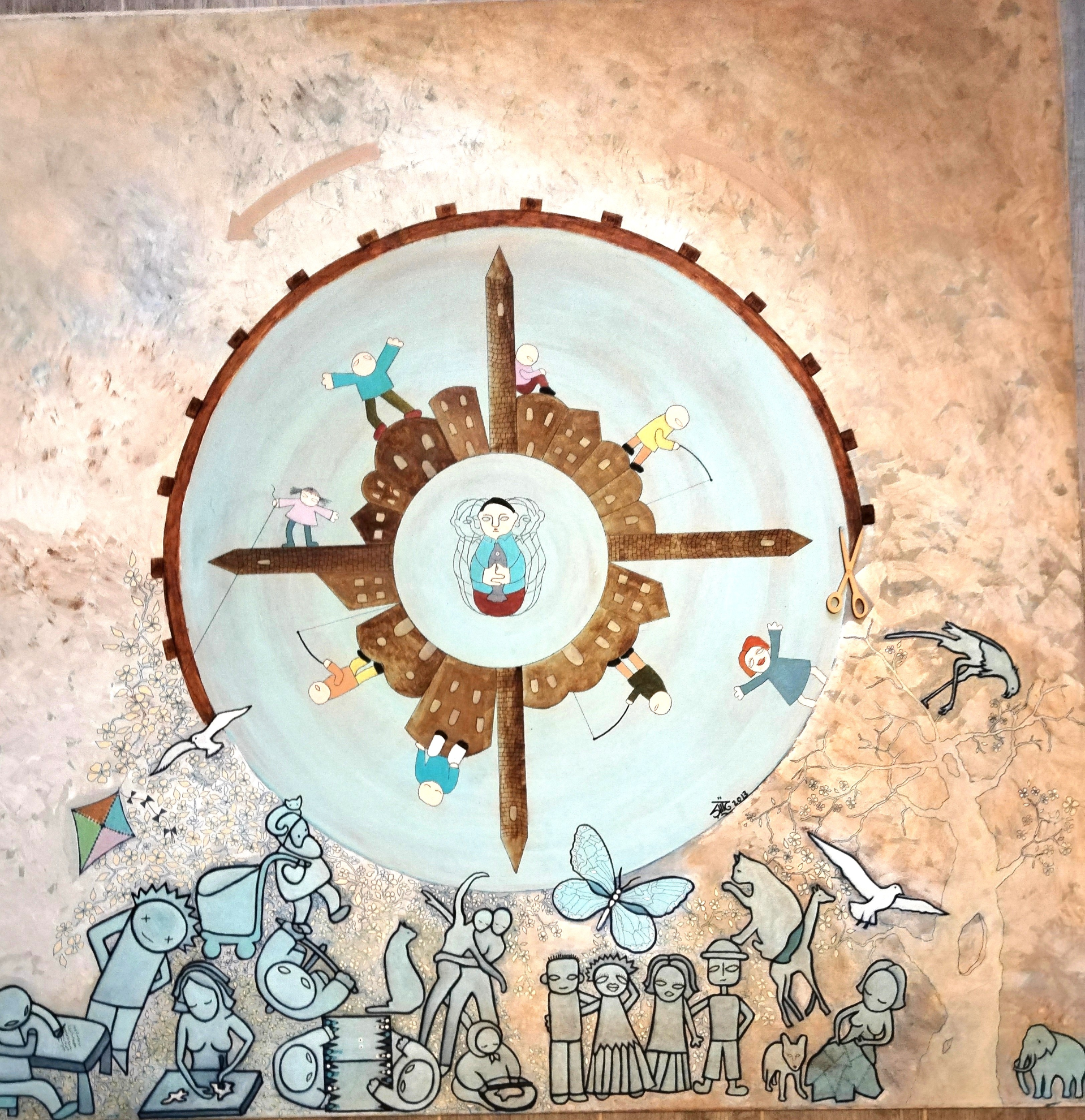
From this perspective, the work Statistics becomes almost a contemporary allegory. Where the system seeks to reduce life to percentages, categories, numbers, bodies resist: they remain suspended halfway in and halfway out, as if refusing to be contained. Beside them appears the personification of art, something no algorithm can predict or control. An unclassifiable body, reminding us that life always exceeds the schemes that attempt to measure it. The same tension is present in Wheel, a broken cog of the capitalist system: a fractured mechanism from which many are pushed out or choose to step aside. The scissors that cut are not violence, but liberation: a symbolic gesture breaking the obligation to belong to the machinery.
Yet this resistance is not only political, but also existential. It is found in Escape, a work born from a shared need that became universal during the pandemic: stepping away from the vertical strain of the metropolis, returning to a more human scale. Years later, this tension takes shape when the artist leaves Istanbul, a city of twenty million, for Cagliari. Here, in a place that lives on a different scale, a new relationship with plants, with quiet, with a non-hierarchical, almost vegetal rhythm emerges. Escape is not about isolation, it is about listening.
Thus, room by room, Şiir Özbilge does not merely represent a world without hierarchies: she enacts it. She practices it. She invites us to imagine a space where coexistence does not mean competing, classifying, establishing who is above and who is below.
A place where the gaze does not dominate, but accompanies.
A place where chaos is not a threat: it is possibility.
And where difference is not a problem to solve,
but a space to inhabit together.
Caroline Floris
NOMADS - Room 4
According to Walter Benjamin, storytelling makes it possible for a person to be considered a member of society and to be defined in his/her relationship with another.
I am a storyteller talking through the language of art.
These stories are part of my ongoing observations and experiences in different geographies, times and cultures.
We are in times of rapid changes. Epidemics, wars, ecological changes, migrations, technological innovations…
Nomad series is a reflection in my works of the situations we experience global scale.
In the last century while we were discussing the allies that would come to earth from space. Today we are trying to establish habitats in space. Leaving behind large amounts of space debris. At the same time, by trying to solve the negative consequences of the “war economy” with migration camps.
In these chaotic periods we are going through, (even though fear is tried to be pumped through most of the media channels) thinking that the joy of living is stronger than fears, I seek the language to face my own fears through my work.
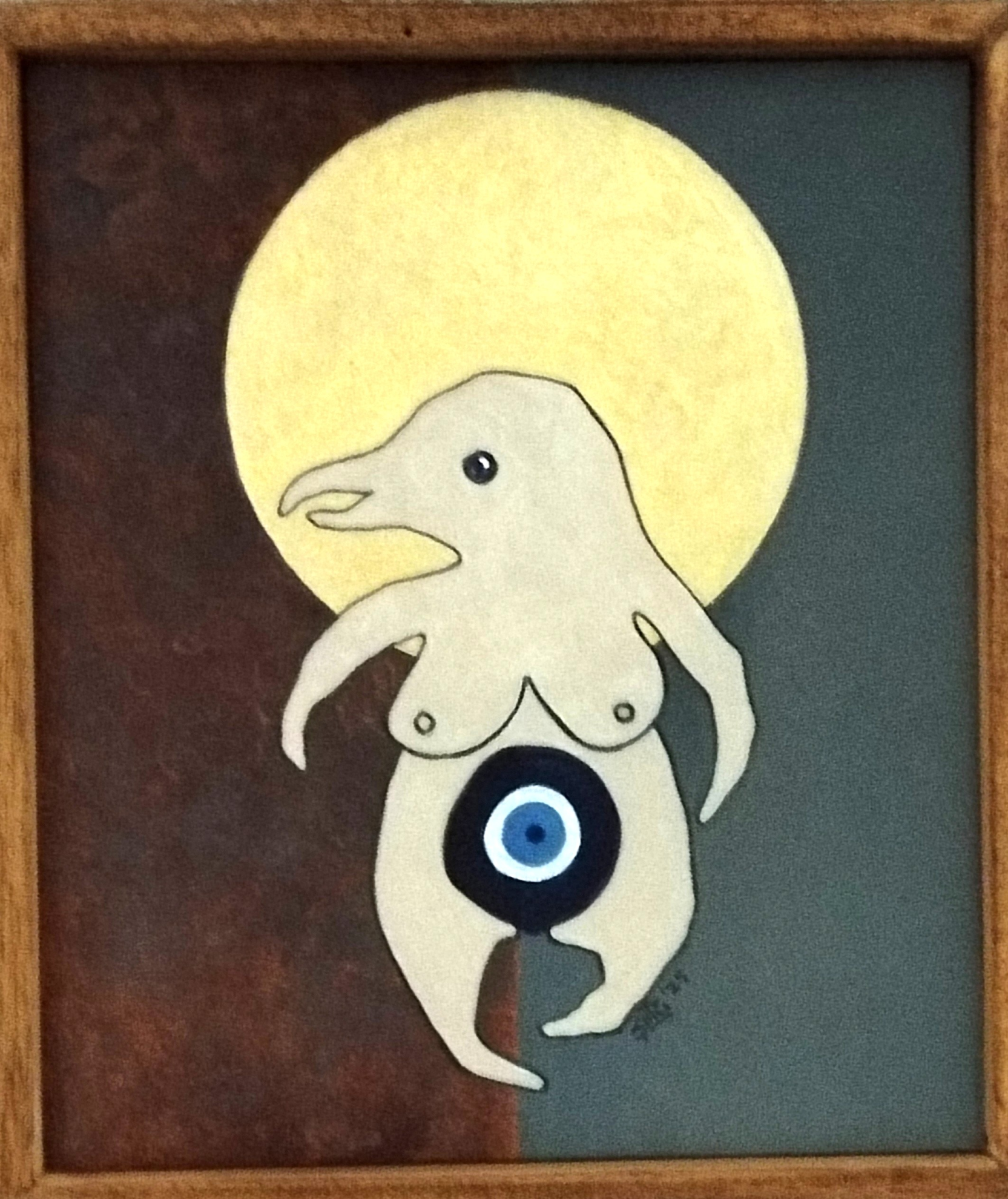
Through giving birth to the 3rd eye…
Siir Ozbilge
Dec.2025
Special thanks to Gündüz Vassaf, Sine Özbilge and Selçuk Yılmazer